Coal Mines Get a Second Life
500,000 Abandoned Coal Mines Could Become America's Largest Energy Storage Network
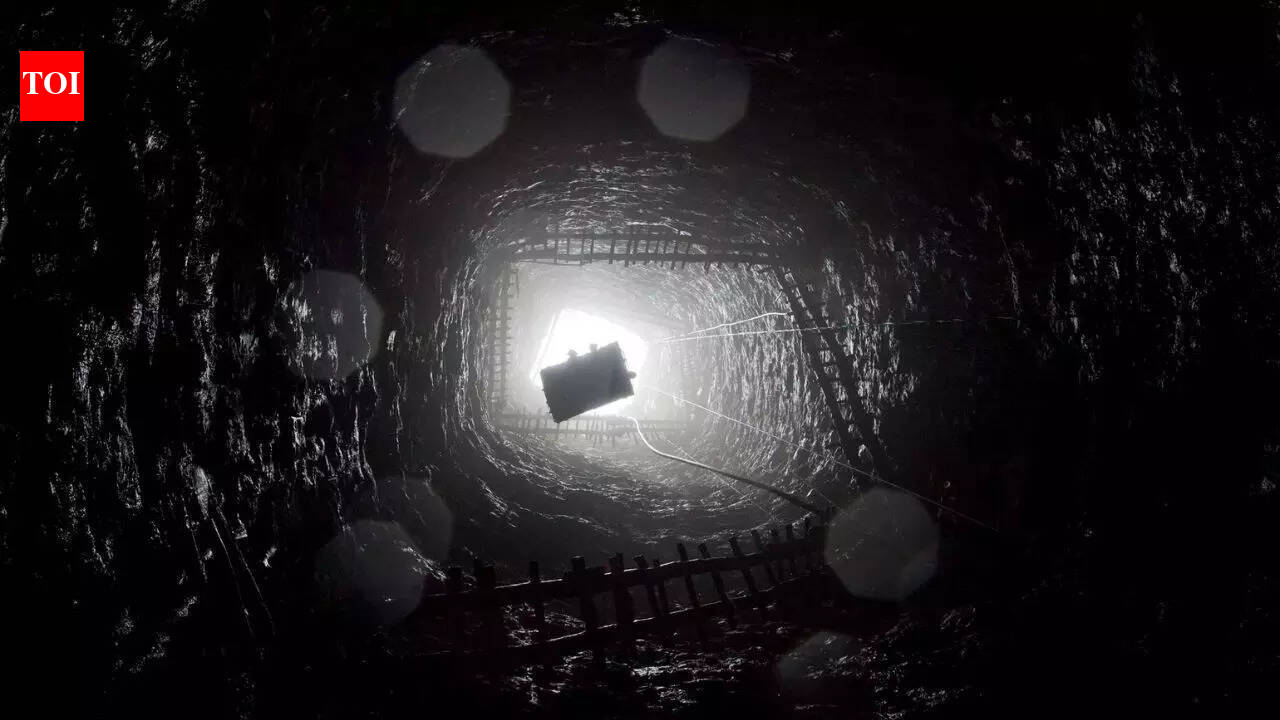
The Geography Problem That Has Stalled Energy Storage for Decades
Pumped storage hydropower is not a new idea — it's been the backbone of grid-scale energy storage for over a century, and it still accounts for more than 90% of all utility-scale electricity storage in the United States. The principle is straightforward: pump water uphill when electricity is cheap or abundant, release it back through turbines when demand rises. Reliable, long-duration, and built on proven physics. The problem is that it needs mountains, and most of the US doesn't have them in the right places.
Regions like Colorado or the Pacific Northwest can build pumped hydro relatively easily. The Great Plains, Appalachia, and the industrial Midwest cannot. That geographical constraint has prevented the technology from scaling into the areas that arguably need grid storage most — former coal-dependent regions now scrambling to integrate intermittent renewables into aging electrical infrastructure. Researchers at Oak Ridge National Laboratory (ORNL) think they've found a way around it. The answer has been sitting underground for decades: the deep shafts of the nation's abandoned coal mines.
What ORNL Actually Built — and Why It Matters
The ORNL team didn't build a mine storage facility. What they built are high-fidelity hydrodynamic and chemical models — sophisticated simulation tools that can evaluate whether a specific abandoned mine can safely and efficiently function as an underground pumped storage system. That distinction is important. There are roughly 500,000 abandoned mines across the US, many of them never fully mapped or studied. Not all of them will work. Rock permeability, structural integrity, shaft depth, and water chemistry vary enormously from site to site, and any one of those variables can make a candidate site unviable.
The modeling tools allow engineers to simulate how water moves through old mine tunnels, how it reacts with the minerals in the surrounding rock, and whether the tunnel walls can withstand the pressure of high-volume water cycling repeatedly over decades. In the proposed system, the deepest tunnels become the lower reservoir. A surface tank serves as the upper reservoir. When surplus electricity is available — from solar, wind, or off-peak grid generation — water is pumped down into the upper tank and held there. When demand rises, it flows back through turbines to generate power. The system is closed-loop: the same water cycles continuously, with no rivers diverted and no valleys flooded.
The chemical environment inside an abandoned mine is one of the less-discussed engineering challenges. Mine water is often acidic and loaded with dissolved metals — iron, manganese, sulfates — from decades of exposure to air and groundwater. That chemistry can corrode turbine components, degrade seals, and complicate the treatment of any water that eventually surfaces. ORNL's chemical modeling component exists specifically to quantify this risk before construction begins rather than after.
Three Storage Approaches for Three Types of Mine
Pumped hydro isn't the only storage method researchers are evaluating for mine sites. The physical diversity of abandoned mines — some predominantly vertical shafts, others branching horizontal tunnels at various depths — opens the door to different technologies depending on the geometry available.
For vertical shafts where water chemistry or permeability makes pumped hydro problematic, gravity-based mechanical storage offers an alternative. Developed by Australian company Green Gravity, the approach uses surplus electricity to lift dense blocks of recycled steel or concrete up the shaft. When power is needed, the weights descend and spin a generator. No water involved, no chemical degradation risk, and — crucially — no performance decline over charge cycles the way lithium-ion batteries experience. For the wide horizontal passages that branch off many main shafts, compressed air energy storage is being evaluated: electricity powers compressors that push high-pressure air into underground chambers, which is released through turbines when power is needed.
The existence of three distinct approaches for three distinct mine geometries matters because it significantly expands the number of sites that could viably contribute to grid storage. A mine unsuitable for pumped hydro isn't necessarily useless — it may simply need a different technology matched to its physical characteristics.
The Economic Case Is as Strong as the Technical One
Many abandoned mine sites come with something that new energy storage projects typically spend years and significant capital acquiring: existing grid infrastructure. Heavy-duty power lines originally built to supply electricity to ventilation systems, water pumps, and underground equipment during the mining era are often still in place. Reusing that infrastructure reduces both the cost and the timeline for connecting underground storage to the grid — two factors that frequently determine whether a storage project is commercially viable before the first shovel breaks ground.
The political context adds another dimension. The Trump administration earmarked $725 million in 2025 specifically to clean up abandoned coal mines and address the hazards — open shafts, unstable ground, polluted water — that threaten communities built around former mining operations. Converting those sites from a liability requiring remediation funding into an asset generating revenue and employment changes the fiscal arithmetic considerably. Several regions where mines are concentrated — parts of Appalachia, the Illinois Basin, the Powder River Basin — experienced severe economic contraction after coal operations closed. Energy storage facilities at former mine sites represent one of the more credible pathways back to industrial employment in those communities, combining federal remediation incentives with the growing commercial demand for long-duration grid storage.
For deeper coverage of long-duration energy storage technologies and the infrastructure transitions shaping the renewable grid, EcoTechNews tracks developments across the full spectrum of green innovation — from underground storage to offshore wind and beyond.
What Comes Next — and What Remains Unresolved
ORNL's modeling work is a necessary prerequisite, not a finished solution. The next phase involves applying those models to specific candidate sites, identifying which mines meet the structural and geological requirements, and designing pilot facilities that can validate the simulations against real operational data. ORNL maintains a national database of mine sites evaluated for depth, stability, and infrastructure conditions — the foundation for that site-selection work.
The timeline from promising model to operating facility is measured in years, not months. Permitting, environmental assessment, engineering, and construction for an underground energy storage project at an abandoned mine site is not a fast process — particularly when the chemical and structural risks inside each site must be individually characterised before any civil work begins. What ORNL has done is establish that the question is worth asking seriously, and built the tools to answer it site by site. Whether the US energy system moves quickly enough to turn that research into deployed capacity before grid storage bottlenecks constrain the renewable transition is a question no modeling tool can answer.


Comments
Post a Comment